Focus Formule
Project Goal
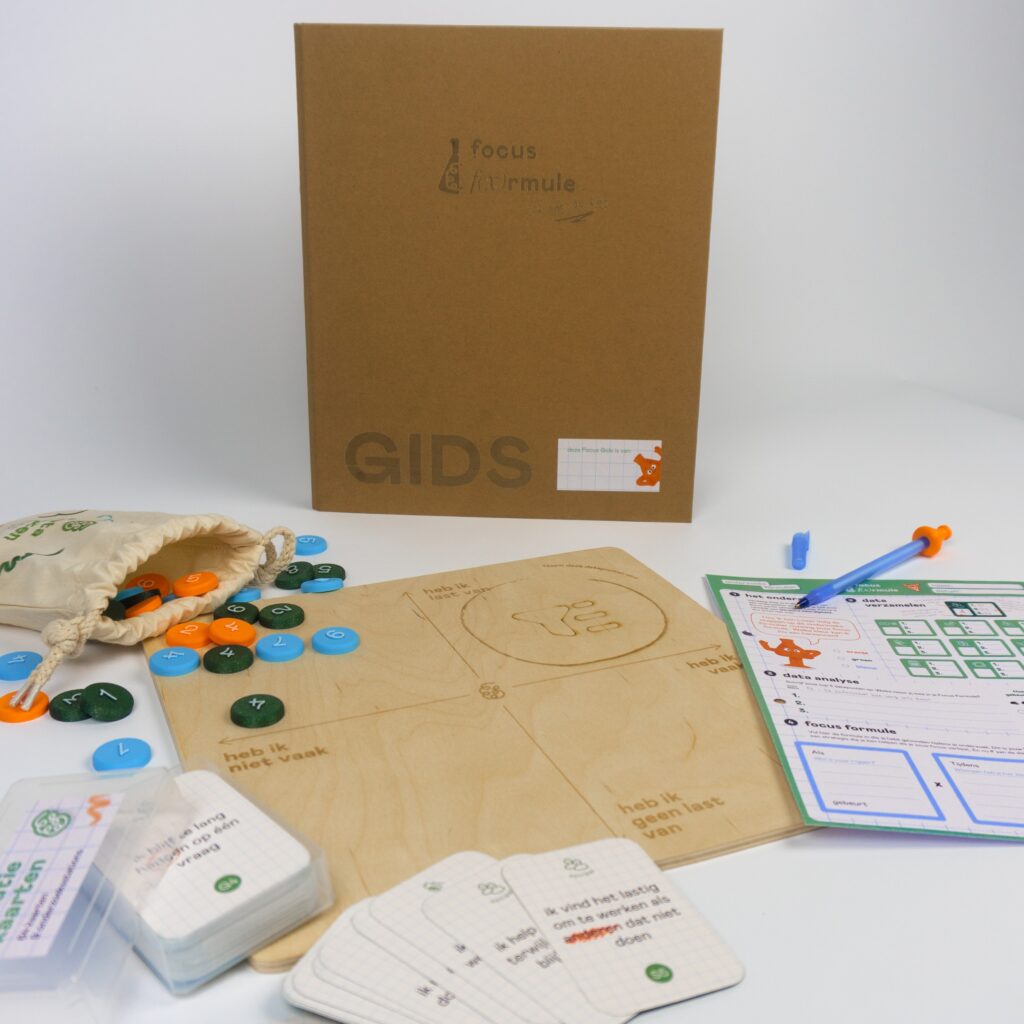
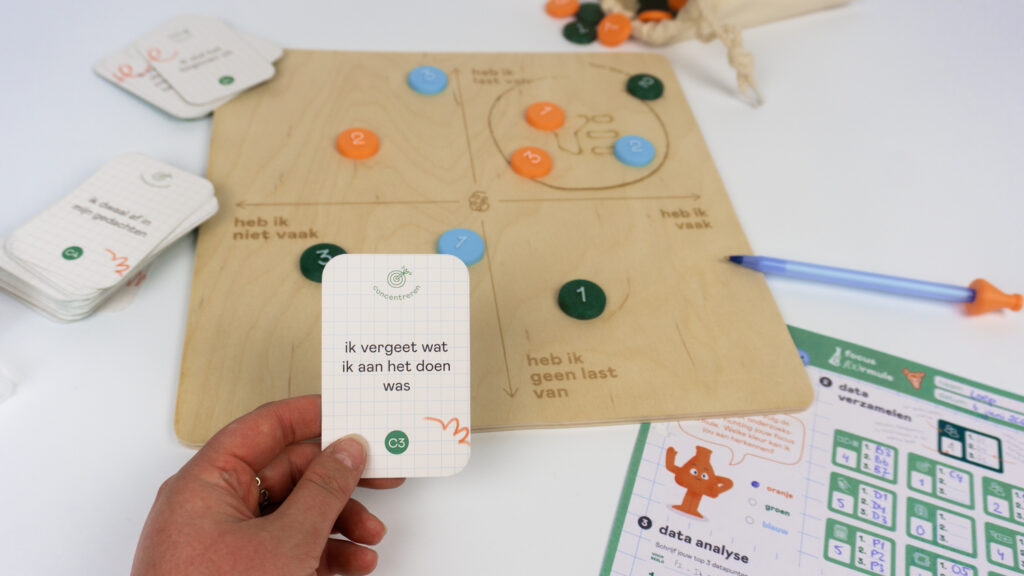
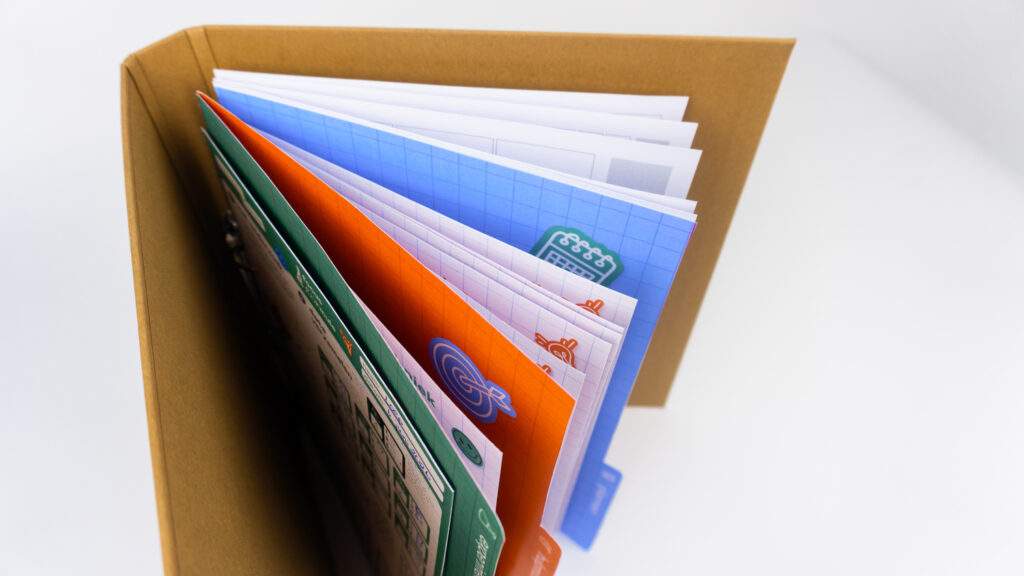
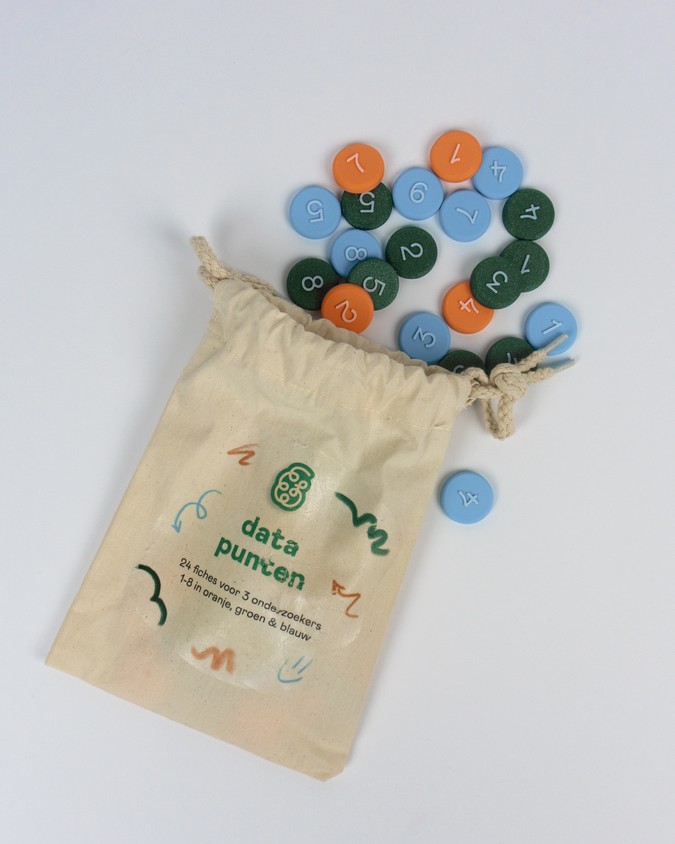
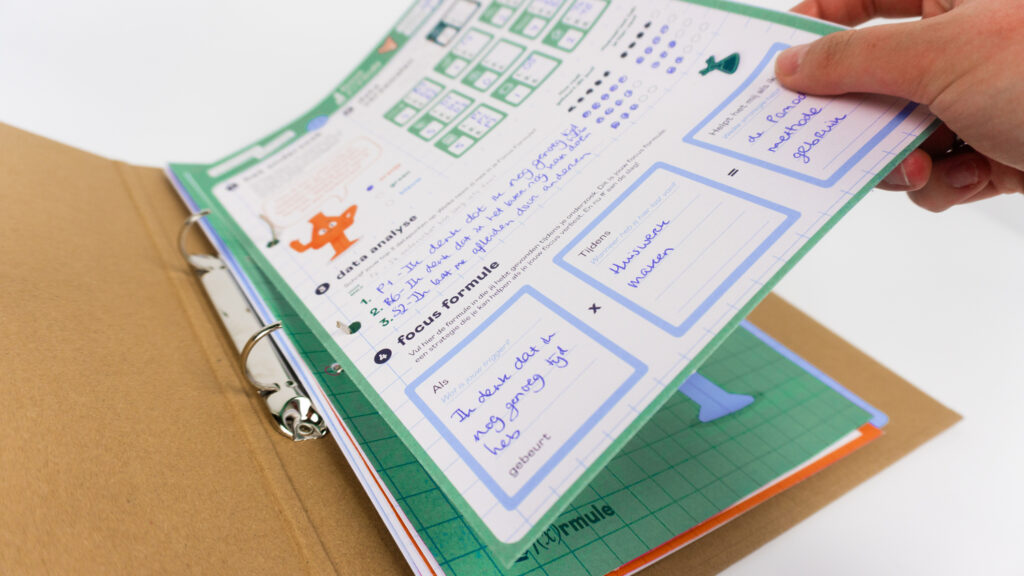
Focus Formule is a personalized learning pathway designed to help first-year high school students develop metacognitive focus skills.
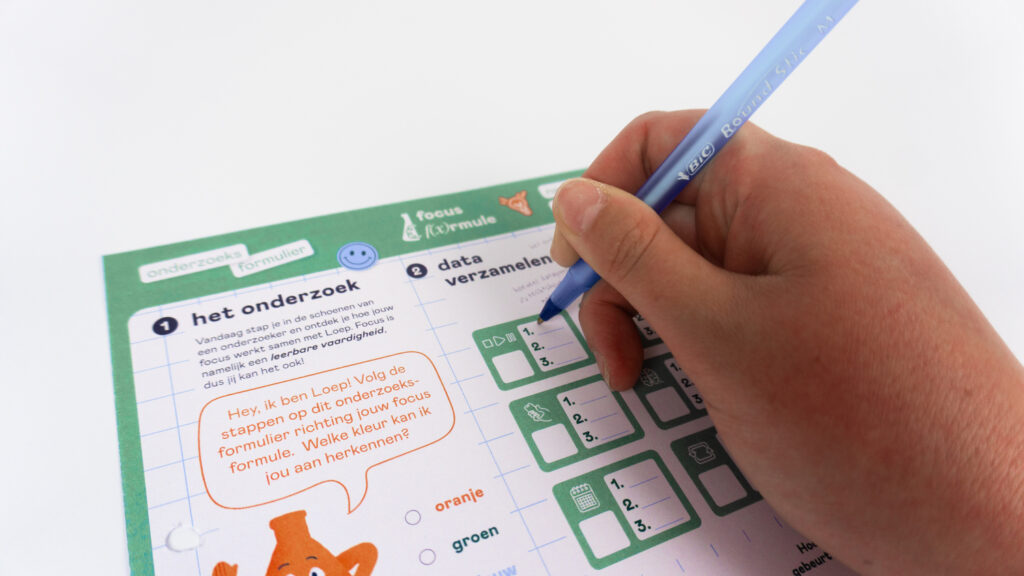
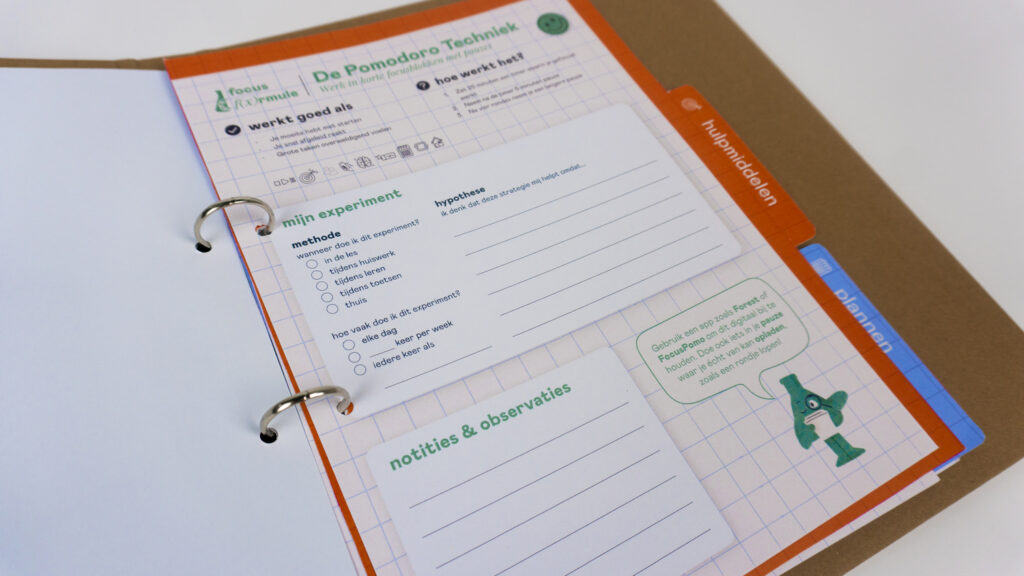
The project responds to the growing challenges teenagers face in today’s attention-driven society by helping them find an effective strategy, rather than a universal solution. Through a process of investigation, experimentation, and reflection, students become researchers of their own focus and shape their Focus Formule. This personal strategy aligns with their own triggers, context, and needs. By transforming focus from an abstract struggle into something students can understand and take ownership of, Focus Formule empowers them to develop the agency and metacognitive skills needed to manage their focus.
Looking back
During this project I experienced the value of collaborating with an involved stakeholder. By constantly checking in with Augustinianum, the intervention did not only align with user needs, but also within the practical context in which it will be used. Moreover, I learned how involving external experts more often throughout my process allows me to take a step back and consider my design from a different perspective. I also took the implementation and business case into account quite early in the process through the design strategy. This helped me remain critical on the feasibility of the design solution, ensuring that the client would receive a sustainable intervention.
An important lesson within this project was my attitude towards uncertainty within the design process. I tend to get stuck in research and conceptual phases, as I want to ensure I am making good choices before committing to an idea. Within my FMP, I tried to push myself to improve my decision making, iterate faster and make ideas tangible. I experienced how a tangible object offered many more insights than an idea that only existed in my head. I realize how uncertainty is not an obstacle in my process, but rather an opportunity to explore new insights that is a natural part of a design process.
As a system thinker, this project also included a solution consisting of multiple elements that form a coherent system. As a result, I had to weigh up the option to fully develop one element against designing the whole system in which some elements had to remain conceptual. I chose to design the system, as I think it required a system to effectively address the complexity of the design challenge at hand.
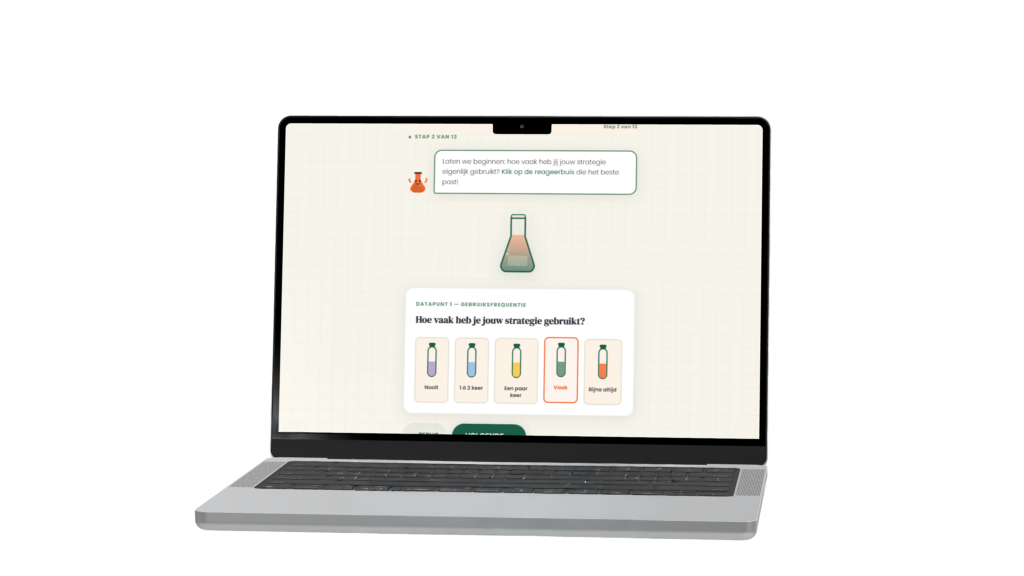
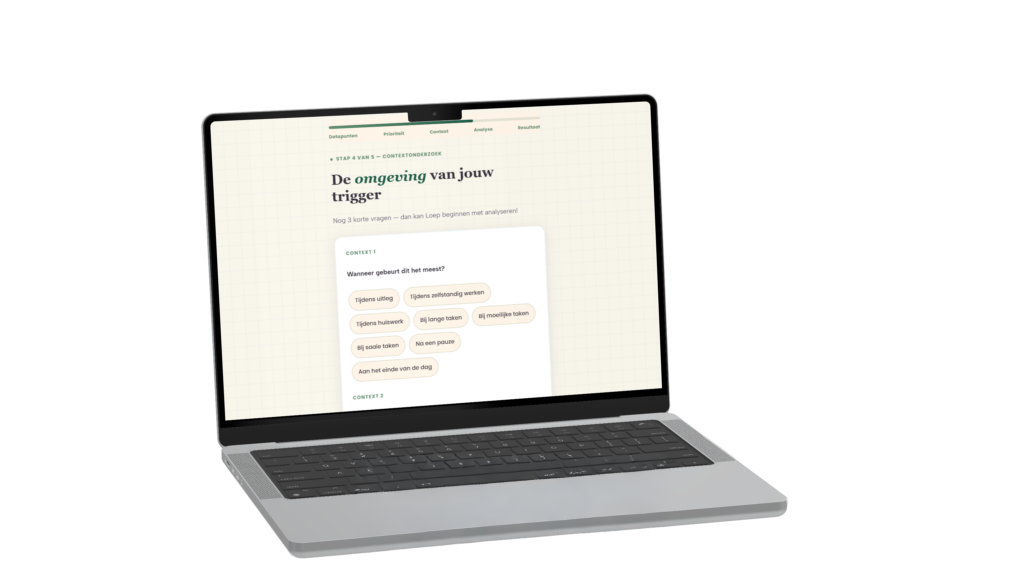
This required me to make conscious choices about which tools and methods to leverage to develop an experienceable prototype. For example, I used Claude to build a functional and interactive webpage. Although this could not perform smart analyses, deliberate design choices in interaction and flow ensure that users can still experience this functionality. I learned how experience prototyping can be used to create a credible system for testing, without needing to develop alle technical functionalities.
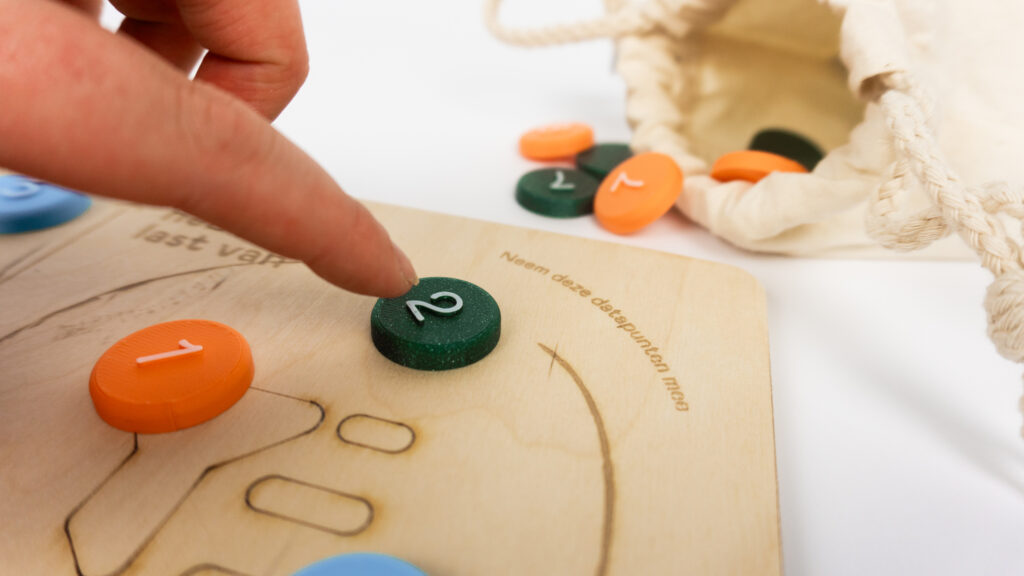
Moreover, this project taught be a lot about how big the influence of a visual language is on user experience. By creating a consistent narrative and connecting elements of the Focus Formule to a scientific theme, I could establish a recognizable structure in which all steps felt logical and intuitive. Intentional use of branding, visual style, and narrative do not only make a design more attractive, but also reinforce understanding, engagement, and accessibility of the design.
There are also some missed learning opportunities throughout this project. Ideally, I would have performed a longitudinal study to evaluate behavioral change over an extended period of time. In addition to this, I noticed how while my perfectionistic approach contributes to the quality of my design solutions, it also comes at the expense of time I could have invested in additional validation. As a result, I am missing that final link between a good design and real-world impact. In hindsight, I also would have involved users more actively in the design process itself, instead of having them provide primarily reactive feedback on existing iterations. By including them in the design process, the final intervention may align more effectively with their intrinsic motivation and world of experience.

In advance of my graduation project, I formulated three learning goals. Firstly, I wanted to strengthen my theoretically grounded design process, in which I have made significant progress. Since my preparation project outlined the direction of this project early on, I was able to formulate a focused theoretical framework that gave me the confidence to make meaningful design decisions. As a result, the underlying framework for the Focus Formule was established early on, which created space to deepen these steps to create a meaningful learning experience.
Secondly, I aimed to employ a larger scale user test. Because of my collaboration with Augustinianum, I was able to conduct a mixed-method user test in two classes. By combining qualitative and quantitative data, I grew my confidence in handling and interpreting larger datasets by using various methods, such as thematic analyses, affinity diagramming, Excel and SPSS. Meanwhile I acknowledge that the absence of a longitudinal study limits the validity of these results.
Lastly, my goal was to integrate various competencies in one coherent design process. In this project, theory, user research, iterative prototyping, branding, and implementation were constantly weaving together. Subsequently, I learned to conduct a comprehensive design process independently and experienced how my competencies can strengthen each other instead of existing separately. The fact that my client expressed how they wanted to implement the Focus Formule directly confirms for me that this approach resulted in a design that is both valuable and implementable.
Looking back on this project, I have not only learned new skills, but also developed more confidence in my role as a designer. I more confident in making design decisions and supporting them by theory, user insights, and expertise. Because of this I feel more capable of tackling complex challenges and translating them into a meaningful and feasible design.
Looking ahead
Throughout my Master’s, learning has been at the core of my activities as a designer. In several projects, I worked within an educational context, but so far, I have approached this primarily from a designer’s perspective. For this reason I want to complement my design skills with pedagogical and didactic knowledge. I believe it is important to understand firsthand how people learn before I design interventions that support their learning process. That is why, as part of my double degree program, I’ll be starting the Science Education program at ESoE this August, where I will be trained as Technasium teacher.
At the same time, I will continue to develop as a designer at Studio Tast. After my Master’s internship, I have continued to work there part-time, where I primarily support production and assist with various design projects. This allows me to further expand my experience with designing for learning in a practical setting.
The Focus Formule will also be continued. In response to the positive and promising feedback from my client Augustinianum and other stakeholders, I want to pursue the development of the Focus Formule into a tool ready for implementation. By doing so, I want to explore the future of the Focus Formule, and how it could potentially be implemented more broadly.
Looking back and looking ahead, the curiosity to keep exploring, developing, and growing remains a recurring theme. This is not only evident in my work, but also in me as a person. This underscores that for me, one belief remains central: learning is living.